

Specialised paediatric oncology service at home
Some medical procedures do not have to mean yet another trip to the hospital. We can bring them closer to the child, at home, safely and in constant contact with the treating doctor.
In progress
Running since
2018
Partners
Rompetrol, Zentiva, Groupama, Synevo
Treatment for paediatric cancer can last months or even years. Throughout that time, children and their families make countless trips between home and hospital – for treatment, tests, assessments or monitoring between cycles.
Some of these journeys are absolutely necessary. Others can be avoided.
Through the home medical care programme, medical teams visit children with cancer for those procedures in the plan set by the treating doctor that can be carried out at home, in safe conditions.
This way, the child spends less time travelling and in hospital, and more time in their familiar environment.
What we can do at home
Depending on the treating doctor’s indication and each child’s needs, services may include:
collecting samples for tests
administering medication
assessing and monitoring the child between chemotherapy cycles
clinical assessment during treatment
training parents and family in the child’s care
psychological and social counselling
palliative care
The services are free for children and their families.
At home, but still connected to the hospital
Home care does not replace the medical team treating the child – it brings that team closer.
The programme is delivered together with paediatric oncology wards and specialised medical staff. Paediatric oncologists coordinate care and schedule home visits according to each patient’s situation.

Medical information from the visits is integrated into DARA, the digital platform developed by Dăruiește Aripi.
In this way, test results, assessments and information gathered at home become part of the child’s digital medical record and can be followed by the treating doctor.
The child can be at home while the medical information stays where it belongs: accessible to the team treating them.
Why it matters
For a child in cancer treatment, a blood draw is not just a few minutes for a lab test.
It can mean:
a journey of tens or hundreds of kilometres
hours spent on the road and in hospital
time away from school
a lost working day for a parent
exposing a vulnerable child to the hospital environment
When the procedure can be done safely at home, all of this can be avoided. And for children who live far from paediatric oncology centres, the difference is even greater.


What we have achieved so far
460 children have benefited from the home medical care programme.
For them and their families, that has meant:
3.400+
home medical visits
8.000+
tests carried out at home
180.000+
km of hospital journeys avoided
6.000+
hospital days that were no longer needed
From a project to a model of care
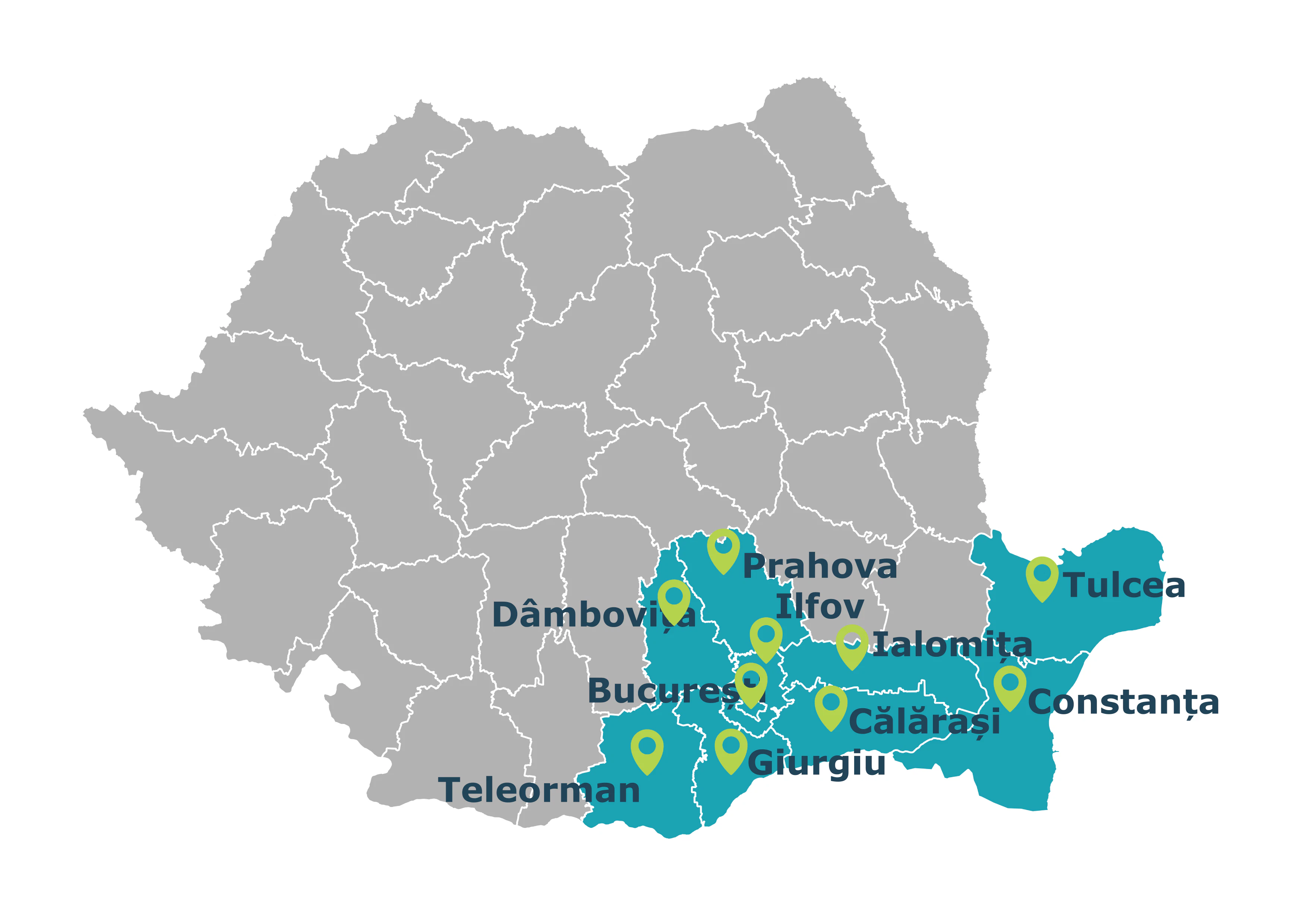
The programme works in collaboration with medical teams from:
Institutul Oncologic București
Paediatric Oncology
Spitalul Clinic de Urgență pentru Copii „Marie S. Curie”
Paediatric Oncology
Spitalul Clinic Județean de Urgență Constanța
Paediatric Oncology
We are working to extend the service to children registered with Institutul Clinic Fundeni as well.
We started this programme to solve a concrete problem: too many children had to go to hospital even for procedures that could be carried out safely at home.
But our goal goes further.
We want home medical care to become a natural part of a child with cancer’s journey, and a model that can be extended to other centres and, where appropriate, to other conditions.
The experience of the Dăruiește Aripi programme and the development of the DARA platform have also contributed to the proposals drawn up together with Societatea Română de Onco-Hematologie Pediatrică for Planul Național de Prevenire și Combatere a Cancerului.
